Hey there, fellow business enthusiasts! Have you ever thought about what keeps a small business thriving even in the face of unforeseen challenges? It’s the magic of insurance! In this guide, we’re going to dive into the nitty-gritty of the three most crucial types of small business insurance commercial policies that no business owner should ignore. Let’s buckle up and explore how these insurance types can safeguard and empower your business to reach new heights.
Imagine this: you’ve poured your heart and soul into your small business. Everything’s running smoothly until one day, an unexpected event threatens to topple everything you’ve built. Sounds terrifying, right? That’s where the power of the right insurance comes into play. With the right coverage, you’re not just protecting what you already have; you’re paving the path for future growth and stability. Ready to find out how? Let’s get started!
Overview of Small Business Insurance

Did you know that 40% of small businesses never reopen after a disaster? That’s where commercial insurance swoops in. It’s your safety net when things get rough.
When you’re running a small business, *anything* can happen. From natural disasters to lawsuits, you’re exposed to risks every day. That’s why having the right commercial insurance is crucial. It shields your business from financial chaos and gives you peace of mind.
Types of Insurance Policies Available for Small Businesses
Let’s break it down. There are several types of insurance policies that can protect your business. First up, we have General Liability Insurance. This covers third-party bodily injuries and property damage.
Then there’s Property Insurance. It protects your business premises and contents from fire, theft, and other perils. And don’t forget about Professional Liability Insurance—a must for service-based businesses to cover negligence claims.
But wait, there’s more! We also have Worker’s Compensation Insurance to cover employee injuries on the job. And Business Interruption Insurance? It helps you recover lost income if a disaster forces your business to close temporarily.
Situations Where Small Business Insurance is Essential
Imagine this: A fire breaks out in your office. Without insurance, you’d be on the hook for repairs and lost assets. Or maybe a customer slips in your store and sues you for injuries. Without liability coverage, you’re facing a major financial hit.
Here’s the deal: Insurance isn’t just a “nice-to-have”—it’s a “must-have.” It protects you against the unpredictable. Your business can withstand the storm with the right policies in place.
Pro Tip: Always review your policies annually to ensure you’re adequately covered as your business grows.
Key Types of Insurance for Small Businesses
Did you know that 40% of small businesses face a claim in their first 10 years? That’s why having the right insurance is crucial.
Here is the deal: Not all insurance types are created equal. Some are essential for your business’s survival, while others can be optional based on your industry.
General Liability Insurance
General Liability Insurance is a must-have for most small businesses. It covers claims related to bodily injuries and property damage that occur on your premises. Imagine a customer slipping on a wet floor at your shop. This insurance has your back.
Pro Tip: Always read the policy’s fine print to understand what’s covered and what’s not.
Professional Liability Insurance
Professional Liability Insurance, also known as Errors and Omissions (E&O) insurance, protects you from claims of negligence or mistakes in your professional services. If you’re in a service industry like consulting or IT, this is your safety net.
Property Insurance
Property Insurance is essential if you own a physical location or have expensive equipment. It covers damage from fires, theft, and some weather-related incidents. Imagine a fire destroying your office space. This insurance ensures you can bounce back.
Comparison of Key Insurance Types
Let’s break down the benefits of each insurance type:
| Insurance Type | Key Benefits |
|---|---|
| General Liability |
|
| Professional Liability |
|
| Property Insurance |
|
Importance of Liability Insurance
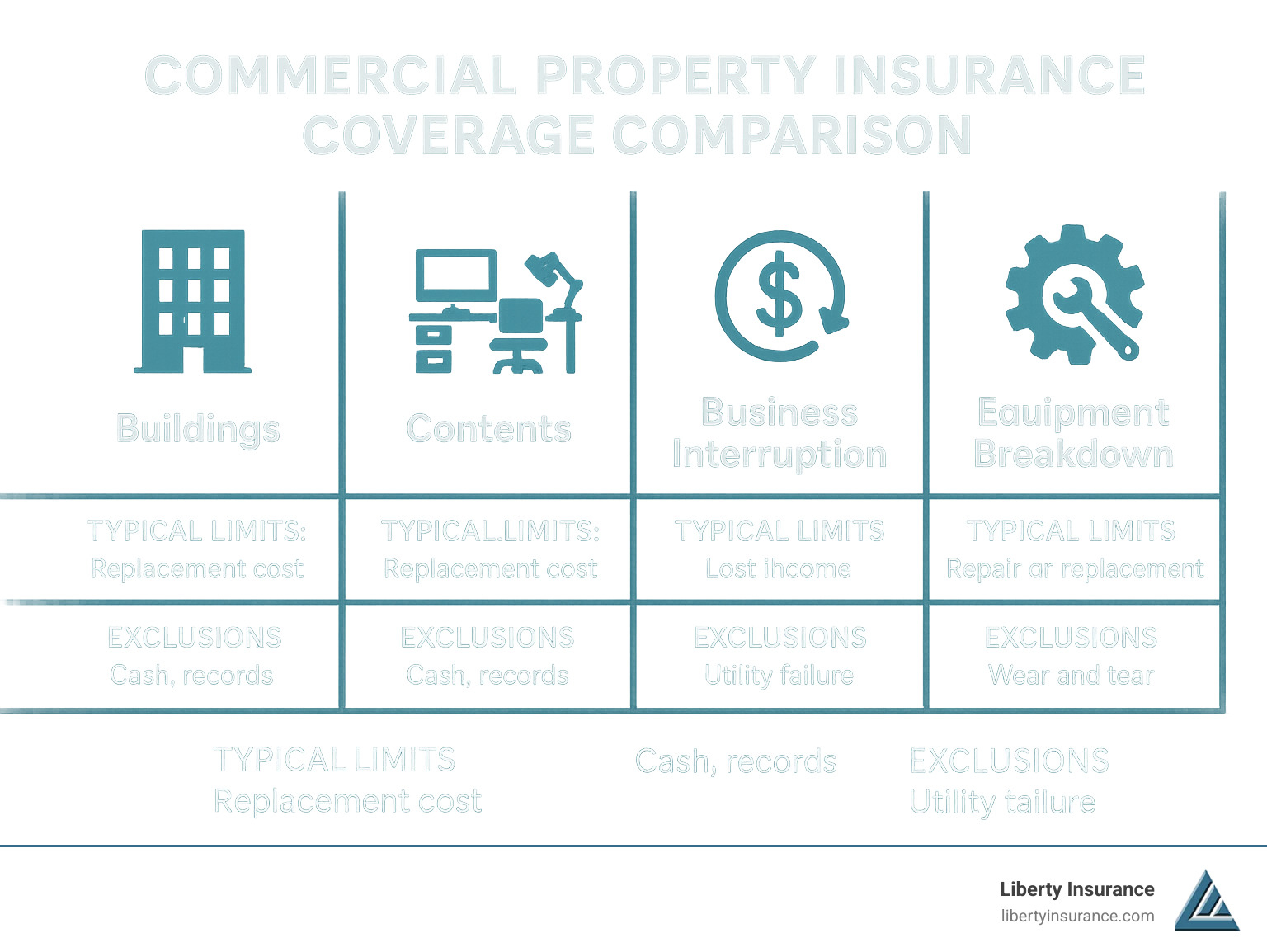
Think your small business is safe from lawsuits? Think again. Without the right coverage, one legal claim could spell disaster for your finances.
Liability insurance isn’t just a safety net; it’s a lifeline. It shields your business from the crushing costs of legal claims that can arise from accidents, injuries, or negligence. If you’re not insured, you’re risking everything you’ve built.
How Liability Insurance Protects Your Business
Liability insurance provides a critical barrier between your business’s assets and legal claims. When an accident happens on your premises or a customer sues over a service mishap, liability insurance steps in to cover legal fees and damages. This means your hard-earned revenue stays with you, not in a lawyer’s pocket.
But here’s the deal: not all insurance is created equal. You need the right policy tailored to your specific risks. For instance, a coffee shop might need coverage for customer slips, whereas a consultancy firm needs protection against errors in advice.
Pro Tip: Most small businesses face liability risks they haven’t even considered. A simple mistake or oversight could lead to a lawsuit costing thousands, or even millions.
Cost Factors and Budgeting for Small Business Insurance
Ever wondered why small business insurance costs vary so much? It’s not just about the size of your business. A slew of factors influence your premium.
Let’s break it down. The type of business you run and, surprisingly, its location, can drastically change your insurance costs. Not to mention, the specific risks associated with your industry play a huge role. Here’s the deal: if you’re a tech company, your insurance needs will look very different from a retail store’s.
Factors Influencing Insurance Costs
First off, your business type is a major determinant. High-risk industries like construction pay more. Location matters too. A business in a coastal area might face higher premiums due to potential natural disasters. Then there’s the coverage limits you choose; higher limits mean higher costs. But don’t forget about your business size—larger operations often mean higher premiums.
Check this out:
| Business Type | Average Annual Insurance Cost |
|---|---|
| Retail | $500 to $1,300 |
| Consulting | $400 to $1,000 |
| Construction | $2,000 to $5,000 |
| IT Services | $650 to $1,600 |
Strategies for Budgeting Insurance Expenses
So, how do you budget for these costs effectively? Begin by assessing your risk factors and choose coverage that aligns with your needs without over-insuring. Step #1: Get quotes from multiple providers. Insurance isn’t a one-size-fits-all, and shopping around can save you big bucks. Step #2: Consider bundling policies. It’s a smart way to get discounts and manage everything under one roof.
Pro Tip: Raising your deductible can lower your premium. Just ensure you’re comfortable with the out-of-pocket cost if you need to file a claim.
Finally, review your policy annually. As your business grows, your insurance needs might change, and you don’t want to be caught off guard. Budget for these insurance costs just like any other critical business expense.
Selecting the Right Insurance Provider
Are you ready to navigate the insurance jungle? Choosing the right provider can feel like finding a needle in a haystack. BUT it doesn’t have to be that way.
Here’s the deal: not all insurance providers are created equal. You need to dig deep to find the one that fits your business like a glove. Let’s break it down step-by-step.
Steps to Evaluate and Choose the Best Insurance Provider
Step #1. Research Reputation: A provider’s reputation is everything. Look for reviews, testimonials, and ratings online. Check out their history and customer satisfaction scores.
Step #2. Assess Financial Stability: You don’t want a provider that can’t pay up when it counts. Dive into their financial ratings using sources like A.M. Best or Moody’s.
Step #3. Compare Coverage Options: Evaluate what each provider offers. Do they have the specific coverage your business needs?
Step #4. Evaluate Customer Service: Call their customer service. Are they responsive and knowledgeable? This is a good preview of their claim handling process.
Pro Tip: A solid insurance provider should have a dedicated claims support team. If they don’t, keep looking.
Criteria Small Businesses Should Consider When Selecting an Insurer
When you’re evaluating insurers, your checklist should include:
- Coverage Specifics: Does the provider offer tailored options for your industry?
- Cost and Value: Balance premium costs with the benefits.
- Claims Process: Is the process easy and swift?
- Customer Support: Are they available 24/7 and through multiple channels?
Remember, a higher premium might be worth it if the provider excels in these areas.
Checklist for Small Business Owners to Compare Insurance Providers
Use this checklist to streamline your provider comparison:
| Criteria | Provider A | Provider B | Provider C |
|---|---|---|---|
| Reputation | ★★★★★ | ★★★★ | ★★★ |
| Financial Stability | Stable | Very Stable | Stable |
| Coverage Options | Comprehensive | Limited | Moderate |
| Customer Service | 24/7 Support | Business Hours Only | Limited |
With this table, you’re not flying blind. You’ll see exactly how each provider stacks up, and make an informed decision.
Real-Life Case Studies
Ever heard of a small bakery that went from hero to zero overnight because of a fire? That’s the kind of risk small businesses face. You need to know how insurance can be your safety net.
Here’s the deal: having the right insurance can turn potential disasters into mere hiccups. Let’s dive into some real-world examples that show why small business insurance is vital.
When Insurance Saved the Day: A Bakery’s Story
Picture this: a bustling bakery in New York City. One day, a kitchen fire almost takes out their entire operation. But thanks to comprehensive property insurance, they were up and running in under a month. The owner shared, “Without it, we would’ve closed for good.” Their quick recovery was due to proactive insurance planning. This case highlights the importance of not just having insurance, but having the right type.
Learning from the Uninsured: A Retailer’s Hard Lesson
On the flip side, a small retailer skipped on liability insurance, thinking they’d never need it. Until a customer slipped and sued them. The result? Bankruptcy. Without insurance, they faced massive legal fees. Lesson learned: the cost of being uninsured can be catastrophic. They realized too late that saving on premiums meant risking their livelihood.
A Tech Startup’s Smart Move
Now, consider a tech startup that invested in cyber liability insurance. When a cyberattack hit, they were covered for data recovery and customer notification expenses. This saved them thousands and retained customer trust. This case shows how foresight in insurance can protect new-age businesses from modern threats.
Comparative Look: Insured vs. Uninsured Outcomes
Let’s break it down further:
| Scenario | With Insurance | Without Insurance |
|---|---|---|
| Natural Disaster | Fast rebuilding & compensation | Business closure & financial loss |
| Legal Action | Coverage for legal fees | High out-of-pocket expenses |
| Cyberattack | Mitigated damages & trust retention | Loss of data & customer trust |
Pro Tip: Always consider the specific risks your business faces and get insurance tailored to those needs.
The choice is clear: having the right insurance is not just smart—it’s essential.
Final Thoughts
And there you have it, folks! Navigating the world of small business insurance doesn’t have to be daunting. By understanding and investing in the right insurance types, you’re not only safeguarding your business’s present but also securing its future. Remember, the right coverage can be the difference between thriving and merely surviving in the competitive business arena. So, take these insights and arm your business with the protection it deserves. Here’s to your business success!
FAQ Section
What are the three most critical types of small business insurance?
The three most critical types are general liability insurance, property insurance, and business interruption insurance.
Why is liability insurance crucial for small businesses?
Liability insurance is crucial because it protects businesses from legal claims and financial liabilities arising from accidents, injuries, or negligence.
How do different types of small business insurance policies provide coverage?
Each policy type offers specific coverage: liability insurance covers legal claims, property insurance protects physical assets, and business interruption insurance covers loss of income during disruptions.
What factors influence the cost of small business insurance?
Factors include the type of business, location, coverage amounts, and the business’s claims history.
How can small businesses budget for insurance expenses?
Small businesses can budget by assessing their insurance needs, comparing quotes from multiple providers, and setting aside a specific percentage of revenue for insurance expenses.
